
When a person is fallen from grace, God makes it so that he is surrounded by many fears, various troubles, sorrows, and misfortunes. God allows him to be burdened with all this, restless on all sides, and struggling even within himself. The reason why God arranges it this way is wonderful, full of love, and goodness...
Like some rich, very rich man, having a beloved son, out of his great love for him, does not want him to look anywhere on the side or from someone else to receive what he needs — food, drink, clothing, shoes or any other consolation and peace — but he wants him to receive all this from him alone, from his father, so that through this he will always be near him and rest on his knees; and if somehow it happens that this son runs away from him and wants to get what he needs from someone else, then the father arranges everything so that the son either does not find anything anywhere at all, or finds it with great difficulty and then; Moreover, he also warns everyone under his authority that if they see his son staggering here and there away from him, they should drive him away and cause him all kinds of trouble, so that he will reluctantly, involuntarily, return to him, to his father who loves him a lot, not finding peace for himself anywhere; In the same way, God dealt with fallen man, arranging for him to find no rest in this life in the things of this world, and through this he was forced to return again to the all-good God, the Lord and Ruler of all, the Father, Provider, Reposer, Redeemer and the Savior, and to always be with Him, so that in this way man would find peace, and God, his Father, having his son with Him, would rejoice over him.
Before the crime, man was in complete happiness, had every consolation, and lived in constant joy in paradise, without grief and sadness, not even knowing what sadness is. But having forgotten himself because of this very great happiness, he came to lust for that which was beyond his measure and beyond his strength, he wanted to be a god, at the suggestion of the devil. For this, immediately, as soon as he attempted something that was impossible for him to obtain, he lost the great happiness and peace that he had, became poor and fell into poverty as great as he had previously had great wealth, thus receiving punishment for the pride with which he was inspired, he dared to attempt that great and bold attempt - as if he was satiated with the happiness that God had given him, and disdaining it, desired something higher.
Having become so poor, he began, due to needs and shortcomings, to undertake all sorts of labors and troubles, but despite all this, not finding as much as he needed as he would have liked, he was either suppressed by grief, sadness and despondency, or made great efforts to achieve contentment and abundance, throwing off the burden of poverty that tormented him.
For the same reason, another became a thief, openly or secretly, another a robber, forcibly taking away someone else’s property, another a covetous person, an unrighteous deceiver; hence envy, betrayal, slander, enmity, disputes, trials, slander, lies, perjury, and murder.
And they forgot God Himself, Who determined for the present life, in the form of a temporary punishment, the poverty deserved by the human race through Adam’s crime. By acting in this way, they can be said to go against God when they strive at all costs to become rich and to abound in everything, despite God’s judgment on us to be poor for this life. Having become rich, they are proud and vain. What will happen next? Here's what: God opposes the proud, and they are seen in the same place where the apostate from God - the devil - ended up.
So, we must know regarding poverty in everything that God righteously imposed it on us as a temporary punishment, and therefore we should endure it with thanksgiving, so that we may attract upon ourselves the compassion, mercy, and care of God. For the Lord loves him, and punishes him — let him humble himself with punitive poverty and be far from pride, but the Lord chastises every son he accepts (Heb. 12:6), with illnesses and sorrows, in order to attract him to himself and have him always with him. For labors and exploits, endured with gratitude, crown him with the crown of patience and make him a pleasant son.
Adam's crime resulted from no other reason than the fact that he had all the blessings in abundance without labor. Why did God, for our crime, ordain that by the sweat of our brow we should eat our bread until we die? If, for the present life, poverty is imposed on all people as a natural temporary punishment, then by all means, whoever tries to escape from under it will fall under eternal punishment. Because it is hardly possible to avoid poverty in real life without theft, untruth, and extortion; Moreover, happiness and wealth naturally give rise to pride, the source of all sin, and the proud, having rushed headlong to the bottom, is taken into its power by shame, that is, carnal passions begin to dominate over them - the product of his unreason and the corruption of common sense in him.
Therefore, a Christian who strives in every possible way to get rid of poverty, obviously does not want to be a true Christian, because a true Christian cannot be without deprivation and needs. The Son of God who became man for the restoration of human nature, did not deign to immediately abolish the first punishment, that is, the need for everything and death, imposed on Adam and our race for breaking the commandment, so that we should eat our bread by the sweat of our brow. And then: "you are dust and to dust you shall return." These judgments remain and will forever remain in our generation, until the end of the age.
But what did our Lord Jesus Christ do, and what is He doing? - That which makes those who believe in His incarnate economy partakers of His power, as the God of hosts, and of His wisdom, as the God of wisdom. And through this, without canceling the first definition, cancels it by taking away its power, inspiring believers to graciously endure all kinds deprivation and sorrow, Himself the first to go to an inglorious death on the cross and becoming for us in this a model and example.
As a result of this, we see that both the Apostles and all true Christians, receiving power from the grace of Christ, joyfully endure all sorrows and temptations and bring worthy fruits to God with great patience. This is why neither the martyrs asked Christ to deliver them from torment and torment, nor the ascetics sought liberation from the labors and sweats of asceticism, but both of them begged only to be granted patience, and with this patience they fought the feat of martyrdom and asceticism in order to receive the reward in the future life for their work.
So sorrow, oppression, and hardship are inevitable for every pious person, and this does not cause damage, but rather strengthens and elevates his piety. Until someone experiences temptations, he cannot understand and know the sweetness and strength hidden in them for life according to God. When he tests them and recognizes this, he cannot help but thank the Lord who tests him. And when he is freed from them, he thanks the Savior not only for the fact that he freed him, but also for the fact that he granted him experience through them. He who has not experienced temptations is inexperienced in life and is not so diligent in pleasing God. And he who has experienced them and is freed from them burns in spirit towards God and thanks Him with all his might. Of course, there are those who are zealous for God and grateful and who do not experience temptations, but not with such fervor as those who experience them and get rid of them. Therefore, it is extremely necessary and salutary for a Christian to fall under temptations, sorrows, hardships, and deprivations, so that he may experience the great helping power of God and thank God with all his soul, with all his thoughts, and with all his strength.
He who lives calmly and has no temptations is subject to two disadvantages: the first is that he is not so zealous for God and does not thank Him with all his heart, and the second is that his mind inevitably indulges in vain worries and concerns. Perhaps Adam would not have been so easily deceived, would not have listened to the evil advice of the devil, and would not have wanted to be a god, if he had thanked God more diligently when he was surrounded by the greatest peace and indescribable joy.
So, just as much as we need to breathe air, we need to thank God in the very temptations, sorrows, and hardships that we are exposed to while walking the path of pleasing God. Let us, my brothers, thank God in everything and endure every temptation and sorrow without complaint, in Christ Jesus our Lord, to whom be glory forever. Amen.
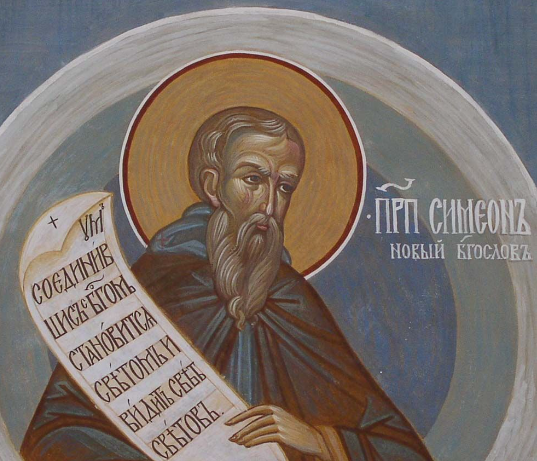
Venerable Simeon the New Theologian "Words". Part 1.
Take action! Resist the assault from the rainbow mafia: